

The London Itinerary I’ve Rewritten a Dozen Times (And Still Can’t Get Tired Of)
When I was a child, if you’d asked me which country in the world I’d drop everything to visit — forget Indonesia’s own islands, forget everywhere else — I would have said England without blinking, London specifically. Blame it on the monarchy obsession. I grew up utterly captivated by the royal family, glued to our local TV watching Lady Diana marry Prince Charles like it was the only news that mattered that year. I followed the House of Windsor the way other kids followed cartoons, and when Diana’s accident happened, my heart genuinely broke a little, thousands of kilometers away in the tropics.
Fast forward to adult life, and the monarchy obsession simply mutated into a broader Anglophile bias I’ve never quite shaken — the BBC’s Sherlock Holmes and the Cormoran Strike detective series are still very much my thing, and I will defend both to anyone who dares call them “just TV shows.”
So when I finally set foot in London for the first time in 2003, it wasn’t a holiday — it was a childhood dream unlocking itself in real time. I’ve been back more times than I can count since, for work and for pleasure, and London remains my favourite kind of bias: completely irrational, utterly unshakeable.
These days London is less “the seat of an empire” and more “the world’s melting pot with very good historical bones.” You’ve got the Houses of Parliament and Big Ben doing their imposing thing at the centre, Westminster Abbey quietly hosting coronations since forever, and the London Eye spinning lazily across the Thames offering views that make you forget your feet hurt. The moment the sun so much as threatens to appear, London transforms — parks fill up, restaurants drag their tables outside, and the whole city develops main character energy.
It’s genuinely hard to narrow London down to four days. But here’s my own curated, walked-it-myself itinerary if that’s all the time you’ve got (or more, if you’re lucky).
Day 1 — Westminster: Where the Kingdom Lives
If it’s your first time and you’re short on days, base yourself around Westminster or Victoria — everything on Day 1 radiates from here, and it’s the geographical and political heart of the city.
Parliament Square & the Houses of Parliament

Start at Parliament Square — easy to reach, a stop on every sightseeing bus, and ringed with statues of the greats: Churchill, Lincoln, Gandhi. The square is framed by Westminster Abbey, St. Margaret’s Church, the UK Supreme Court, and the Palace of Westminster itself, better known by its famous resident: Big Ben, tucked inside the golden Elizabeth Tower. A few fragments of the original medieval palace survive, including the 14th-century Jewel Tower, which you can actually go inside.
Westminster Abbey

Dating back to 1245, this Gothic masterpiece has hosted every English and British coronation since William the Conqueror in 1066, plus royal weddings including William and Kate’s in 2011. Inside are the tombs of a thousand years’ worth of royalty, scientists, and artists. As of 2026, adult entry is £31 (£14 for ages 6–17, under-5s free), though there’s a discounted VAT-relief window running 25 June to 1 September that brings it down to about £27. It’s open Monday to Saturday, 9:30am–3:30/4:30pm depending on the day, and closed to tourists on Sundays (church services only). Book ahead — timed entry is standard now, not optional. Book here.
Buckingham Palace and changing of the guard ceremony
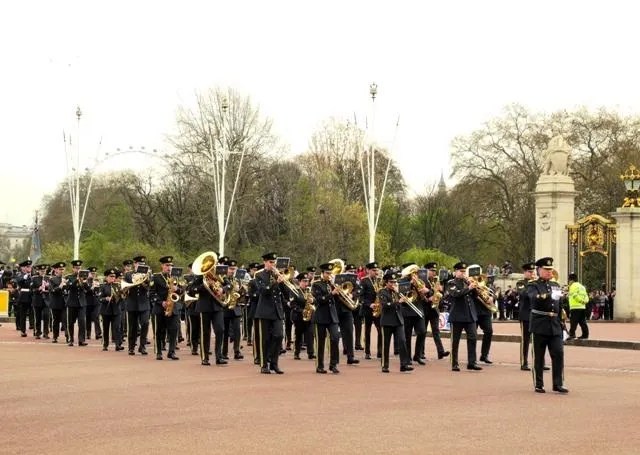
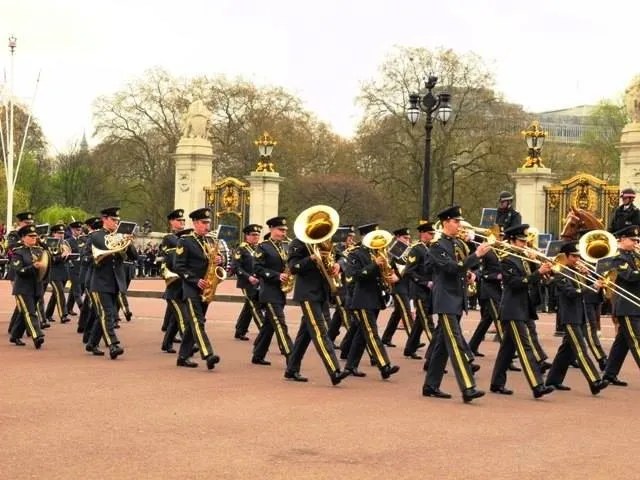
The Palace dates back to 1703, originally built as a townhouse for the Duke of Buckingham before King George III acquired it; Queen Victoria was the first monarch to actually live there. The Changing of the Guard happens, weather permitting, at 11:00am on select days (check the British Army’s site for the current schedule, since it varies by season) and runs about 45 minutes. Watch from the Guard House end — fewer crowds, same spectacle.
If you want to go inside, the State Rooms open to the public every summer — for 2026 that’s 9 July to 27 September, with adult tickets at £33 (£21.50 for ages 18–24, £16.50 for children over five, under-5s free with a booked ticket). Heads up: due to ongoing renovation works, the White Drawing Room is off-limits this summer and parts of the Ballroom are behind hoardings — so if you’re a completionist, you might want to wait for 2027. Book here.
St James’ Park
Walk through this 50-acre Royal Park toward the Palace for some greenery and the resident pelicans. There’s a café for a coffee break, or bring your own picnic — Marks & Spencer Food is still my go-to for provisions. Nearby is the Guards Museum and St James’s Palace, still used today as a royal residence and meeting place.
Piccadilly Circus and Trafalgar Square


Head from St James’s Park to Piccadilly Circus — no clowns, just neon signs and the Shaftesbury Memorial Fountain, plus easy access to the West End’s theatres and shopping streets. Trafalgar Square follows, home to Nelson’s Column, the stone lions, and the ever-changing Fourth Plinth art installation. The National Gallery and National Portrait Gallery both sit here — free entry, open daily 10am–4pm (until 9pm on Fridays) — and if you love art even a little, budget real time for one of them.
Whitehall

Walk south from Trafalgar Square down Whitehall, named for the long-gone Palace of Whitehall, once the largest palace in the world with 1,500+ rooms before a 1698 fire took it out. The Banqueting House survives and is worth a look for Rubens’ ceiling alone. You’ll pass government buildings, the Household Cavalry Museum, the Cenotaph war memorial, and the gates of Downing Street, where you can peek through for a glimpse of No. 10.
Churchill War Rooms

The underground bunker from which Britain ran its WWII effort, paired with a museum on Churchill’s life. Adult tickets start from £33, with a summer discount window (25 June–1 September) bringing the price down further. Open daily, though note it opens later (from 9am) on Fridays and Saturdays specifically — check current hours before you go. Book here.
Cross back over Westminster Bridge for the postcard view of Parliament and the Thames.

London Eye and The South Bank

Europe’s tallest observation wheel is a great sunset stop, and it stays open late — book ahead to skip the line and save money. If you’ve still got legs left, the London Dungeon is next door for theatrical scares (skip it with young kids or anyone who startles easily). Nearby: Sea Life London Aquarium and the Shrek’s Adventure attraction for families. End the day at Southbank Centre — restaurants, historic pubs, and a river walk that makes you feel very cultured indeed.
Day 2 — The City of London
The City is London’s other “city within a city” — the financial heart, and also its oldest patch of ground.
Tower of London


My interest in the Tower of London, oddly enough, started with a fantasy book — Jonathan Stroud’s Bartimaeus trilogy, specifically The Amulet of Samarkand. In that world, the Tower doubles as headquarters for the government’s Police and Security departments and a high-security prison for detained spirits and political prisoners. Turns out fiction wasn’t exaggerating by much. The real Tower is a 900-year-old fortress that’s been a royal residence, a mint, a menagerie, a prison, and now a UNESCO World Heritage Site holding the Crown Jewels. Famous former “guests” include Anne Boleyn and Lady Jane Grey, neither of whom checked out voluntarily. Adult tickets are now £37 online (£18.50 for ages 5–15, free under 5), and there’s no more family ticket bundle — everyone pays their own rate. Open daily from 9am; last admission 3:30pm. Book here.
Tower Bridge

Not to be confused with the far less photogenic London Bridge (the current version dates only to 1973, despite the name’s ancient pedigree). Built 1886–1894, it’s the icon everyone actually means when they picture “London Bridge” in their head. Best photo spot: St Katharine Docks Marina, which also happens to be a decent lunch stop.
HMS Belfast


A Royal Navy cruiser that served in WWII and Korea, now moored permanently on the Thames under the Imperial War Museums umbrella. Open daily 10am–5pm (last entry 4pm). Great for anyone travelling with kids who like climbing ladders and imagining themselves at battle stations.
The Shard

Western Europe’s tallest building, completed in 2012, with its viewing gallery — The View from the Shard — spread across floors 68, 69, and 72. On a clear day you can reportedly see up to 40 miles. Ticket prices shift by date and time slot (roughly £30–40 range for adults), so check the official site before you go rather than trusting an old number — mine or anyone else’s. A cheaper alternative with nearly as good a view: Sky Garden, London’s highest public garden, which is free but requires booking a time slot in advance.
London Bridge and Borough Market


A short walk from HMS Belfast gets you to Borough Market, trading since around 1014 and still one of the best food markets in the country — fresh produce, cheeses, wine, and every kind of street food you can imagine, from Ethiopian wraps to beef stew. Usually open 10am–5pm, closed most Sundays. Perfect spot for an early dinner and a rest for your feet.
Shakespeare’s Globe
Cross the Millennium Bridge for a faithful modern reconstruction of Shakespeare’s open-air theatre, close to (but not exactly on) the original site. You can tour the exhibition or catch an actual performance — summer for the open-air stage, year-round for the candlelit indoor Sam Wanamaker Playhouse.
Day 3 — Notting Hill, Oxford Circus & the West End
Notting Hill and Portobello Market


Pastel houses, cobblestone charm, and — if your timing lands on a Saturday — the full Portobello Road market experience, stretching for a mile into Golborne Road. Great for browsing, people-watching, and the occasional impulse buy you’ll have to explain to customs.
Oxford Circus & Oxford Street


Europe’s busiest shopping street, with roughly 300 shops. Selfridges is the department store to hit if you’ve got errands, and Niketown London (about 42,000 square feet across four floors) is a pilgrimage site if you’re into sneakers.
Covent Garden


A major hub for shopping, theatre, and history, including the London Transport Museum, the Royal Opera House, and Somerset House. My personal favourite corner is Neal’s Yard — colourful, easy to miss, and home to Neal’s Yard Remedies, still my go-to for essential oils and natural skincare.

West End Theatre

A great way to close Day 3. Over 30 theatres operate in the West End, London’s answer to Broadway.
If you’re a Harry Potter fan, note that Harry Potter and the Cursed Child is mid-transformation this year: the original two-part production (about five hours across two visits) is running its final performances at the Palace Theatre through 20 September 2026, after which it closes briefly and reopens on 6 October 2026 as a single, reimagined one-part show running about 2 hours 55 minutes. So depending on when you’re reading this — if you visit before 20 September, you can still catch the legendary two-part original; after 6 October, it’s one ticket, one evening, done. Either way, book ahead. Ticket info here.
Before your show, wander through Chinatown on the northern edge of Leicester Square and let your nose lead you to dinner.


Day 4 — Kensington, Chelsea & Beyond
Kensington Palace


Unassuming from the outside, genuinely stacked with royal history inside. It’s been a royal residence for almost 300 years, and the exhibitions rotate through Queen Victoria’s life, the Hanoverian court, and royal wardrobes across generations. Check the palace’s own site for current opening routes and pricing, as these have shifted post-renovation. Nearby: the Victoria & Albert Museum and the Natural History Museum, both worth an afternoon each if you have the time.
Greenwich
Home to the Cutty Sark, the National Maritime Museum, the Old Royal Naval College, and the Royal Observatory sitting on the Greenwich Meridian line. With half a day, pick one or two: walk the Cutty Sark’s decks, straddle the Prime Meridian, or wander the Queen’s House (a filming location for Bridgerton and The Crown, if that sways you).
Camden
If you want one more market fix: Camden started as a cluster of canal-side craft workshops and is now a sprawling hub of handmade goods, music memorabilia, and street food from everywhere. Good nightlife scene too, if your feet have any life left in them by evening.
If You Have More Days
Day 5 ideas: Emirates Stadium for football fans, the Harry Potter Warner Bros. Studio Tour in Leavesden (plus the obligatory Platform 9¾ photo at King’s Cross), Madame Tussauds, the Sherlock Holmes Museum on Baker Street, or shopping at Harrods and Hamleys.
Day 6–7 ideas: Day trips beyond London — Stonehenge, Bath, Oxford, Cambridge, the Cotswolds, Stratford-upon-Avon. You can combine a couple in one guided day trip, or do it properly, DIY style, one town a day by train (my strong preference, obviously).
More than a week? Take the train up to the Lake District if you’re a nature person, or head to Edinburgh and give Scotland the time it deserves.

Closing Thoughts
Here’s the thing about London: it never quite stops being my childhood crush, even now, over a decade and more visits than I can properly count later. Every time I think I’ve “done” it, some museum reopens, some play reinvents itself, some ticket price quietly goes up (thanks, inflation, very cool), and I find myself booking a flight anyway. That’s the real difference between a packaged tour and doing it yourself — you get to fall in love with a city over and over, on your own terms, instead of being herded past it once. Diana would be proud, I think. Or at least mildly amused that a girl from the tropics never really got over that wedding on TV.


Emirates? Tottenham Stadium is the place to go!
😍😍😍