

3 Days in Vienna: Where History Doesn’t Sit Quietly in Museums
Austria was the third country on our Europe by Train girls’ trip, and we’re covering it in three parts: Vienna, Hallstatt, and Salzburg. We’ll start with Vienna.
Austria’s imperial capital is a city where history does not sit quietly in museums. It lives in palaces, in concert halls, in gilded statues, and even in the rhythm of trams gliding past Baroque façades.
Founded as the Roman military camp Vindobona in the first century, Vienna later flourished under the Habsburgs, especially during the reigns of Empress Maria Theresia (1740–1780) and Emperor Franz Joseph (1848–1916). Their legacy shaped the cityscape we admire today: grand boulevards, ornate palaces, opera houses, and coffee houses that seem frozen in time.
Vienna is elegant without trying too hard. Imperial, yet cozy. Grand, yet family-friendly.
And if you truly want to enjoy it, allow yourself at least three days.
The Icons of Vienna
The magnificent Belvedere Palace houses the Austrian Gallery and the world’s largest collection of Gustav Klimt, including The Kiss, alongside works by Schiele and Kokoschka.
Vienna’s unmistakable landmarks include:
- St. Stephen’s Cathedral (Stephansdom), the Gothic heart of the city
- The historic Giant Ferris Wheel at Prater
- The Spanish Riding School and its world-famous Lipizzaner horses
Beyond architecture, Vienna is music. Mozart. Strauss. Beethoven. Haydn. The Vienna Philharmonic. The Staatsoper. The Vienna Boys’ Choir. It’s difficult to walk this city without feeling like there’s a soundtrack playing in the background.
Practical Information
From Vienna Central Station to the City
Vienna’s modern Central Railway Station (Wien Hauptbahnhof), opened in 2014, is beautifully designed and extremely efficient. It functions as a through-station, connecting routes from all directions across Europe.
From Wien Hbf:
- Take U1 (red line)
- About 5 minutes to Stephansplatz (city centre)
- About 12 minutes to Vienna International Centre (Kaisermühlen-VIC)
- Trains run every 3–5 minutes during the day
Simple, seamless, and stroller-friendly.
Getting Around Vienna
Vienna’s public transport system, operated by Wiener Linien, is one of the most reliable in Europe, and it’s actually grown since we first wrote about this trip. There are now six underground lines (U1 through U6, after the new U5 began opening in phases from December 2024), alongside 29 tram lines and well over 100 bus routes, including night buses. The metro runs 24 hours on Friday and Saturday nights and the eve of public holidays.
Fares went up at the start of 2026, so if you’re budgeting from an older post (including an earlier version of this one), update your numbers: a single ticket is now €3.20 on paper or €3.00 bought digitally, and a 24-hour pass is €10.20 (€9.70 digital). Worth noting: the old 48-hour and 72-hour passes have been discontinued entirely — if you’re staying a few days, either stack 24-hour passes or jump straight to the 7-day pass (€28.90 paper, €25.20 digital), which works out cheaper than you’d expect for a 3-day visit once you’re doing more than a couple of rides a day.
What we particularly appreciated: elevators at metro stations. Traveling with a stroller suddenly felt easy — no lifting, no dramatic stair moments. Austria gets practicality right.
Our Itinerary
Day 1 — Prague to Vienna
We took the train from Prague to Vienna. By this point in the trip, seasoned travelers that we were, we knew how to locate the non-reserved seats. Alyssa had her books and coloring pencils; we had snacks. Train journeys in Europe are a blessing when traveling with children — space to move, windows to stare out of, and no seatbelt negotiations.
We booked through the Austrian rail website (ÖBB), which I personally found more user-friendly than some others.

Our hotel was directly across from the train station, always a smart choice when traveling with a child, and the station is connected to a mall, so food options were abundant and easy.
Sari wasn’t feeling well — she’d caught Alyssa’s virus back in Prague — so we rested in the afternoon before heading to Stephansplatz for dinner.
Stephansplatz is the geographic and emotional center of Vienna, dominated by St. Stephen’s Cathedral, one of the tallest churches in the world. We sat at an outdoor café until dusk before finding an Asian restaurant for dinner. Alyssa fell asleep in her stroller — the universal sign of a day well spent.


Day 2 — Markets, Museums & A Little Waltz
Naschmarkt

We began the morning at Naschmarkt, Vienna’s most popular market, stretching about 1.5 km along the Wien River. Fresh fruits, olives, truffle cheeses, exotic herbs, seafood, pastries, and countless small eateries offering everything from sushi to Viennese classics. We picked up snacks before meeting our friend Ebke, who was traveling solo, in front of the Albertina.
Vienna’s museum culture is serious. Among its highlights:
- Kunsthistorisches Museum, home to the world’s largest Bruegel collection
- MuseumsQuartier (Leopold Museum, MUMOK, Architekturzentrum)
- Albertina, with 60,000 drawings and over one million prints
We wandered, absorbed culture, and eventually bought concert tickets for the evening.


Horse Carriage Ride
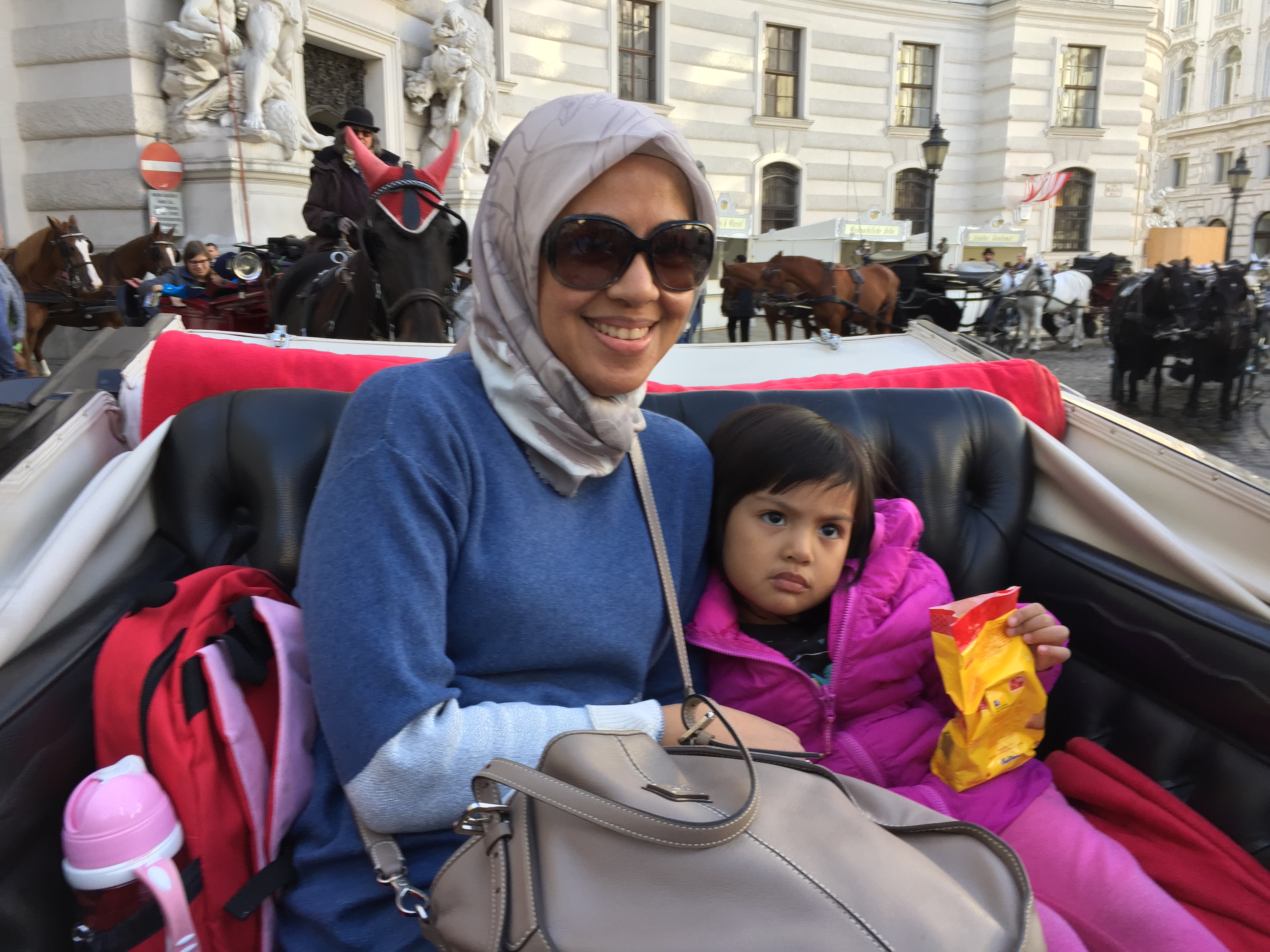
After hours of walking, we gave in and took a horse carriage ride — officially for Alyssa, unofficially for us. She tried to act cool. The adults were clearly more excited.

The Prater & The Giant Wheel
In the afternoon, we took the metro to Prater. Originally imperial hunting grounds opened to the public in 1766, the park now houses the historic Wurstelprater amusement park.
The highlight is the iconic Vienna Giant Ferris Wheel (Riesenrad), built in 1897 for Emperor Franz Joseph’s Golden Jubilee. It survived wars, bombings, and partial destruction in WWII. Today, only 15 of the original 30 gondolas remain, which adds to its nostalgic charm rather than taking away from it. A ride costs around €12–14 for adults, with reduced pricing for kids, and the whole loop takes 12–15 minutes.


Mozart & Strauss Mini Concert
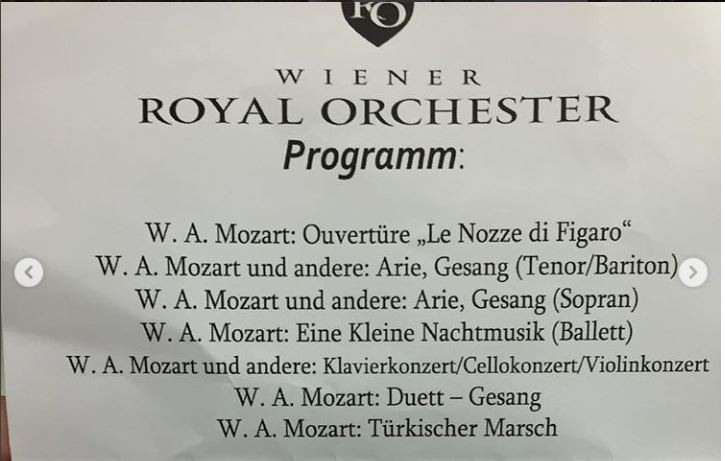
That evening, we attended a one-hour concert at Beethovenplatz. We impulsively bought tickets from a street vendor — slightly risky, but it paid off. The performance was intimate and family-friendly: a mix of opera, ballet, and orchestral pieces. It turned out to be the perfect introduction to classical music for Alyssa, and she sat through it beautifully.
Vienna makes classical music feel accessible, not intimidating. If you’d rather book something more established in advance than take a chance on a street vendor, that’s a reasonable call too — there are plenty of small, family-friendly chamber concerts around town with the same easygoing, unintimidating spirit.



Day 3 — Schönbrunn & Marionettes
We’d originally planned a day trip to Bratislava (only an hour by train), but rain and Sari’s cough changed our plans. Instead, we visited Schönbrunn Palace.
The former summer residence of the Habsburgs, this 1,441-room Rococo palace reflects over 300 years of imperial ambition. Opening hours vary seasonally — generally from around 8:30 am, with the palace itself closing anywhere from 5 pm in winter to 6:30 pm in peak summer — and the gardens open earlier and stay open later than the palace interior.
Getting there:
- U4 to Schönbrunn
- Tram 10 or 60
- Bus 10A
The gardens are free to enter and are vast and stunning. You can walk up to the Gloriette (built in 1775), which sits elevated above the palace grounds; reaching the hill and viewing the Gloriette from outside costs nothing, though climbing to the rooftop viewing terrace itself requires a separate small ticket, around €5.
I confess: pushing a stroller uphill was not happening. We admired it from below. You could easily spend an entire day here exploring the palace interiors, gardens, maze, and even the zoo.


Stadtpark
While Sari rested, Alyssa and I went to Stadtpark, Vienna’s oldest public park. Here stands the gilded statue of Johann Strauss (built in 1921), one of the city’s most photographed monuments. The park also houses the historic Kursalon, which continues to host concerts and balls.
A playground plus a classical composer statue is a perfect balance.


Schönbrunn Marionette Theatre
In the evening, we returned to Schönbrunn for something magical: the Marionette Theatre. The tradition of puppet storytelling at the imperial court dates back 250 years, and the technique itself is recognized on UNESCO’s Intangible Cultural Heritage list. Full evening productions for adults, like Mozart’s The Magic Flute, run around two hours and twenty minutes, but there are also shorter, dedicated children’s versions of the same story running closer to an hour — worth specifically asking for if you’re booking with a young child, since the adult-length show is a long sit for a three-year-old.
Handcrafted wooden marionettes dressed in silk and lace, elaborate lighting, beautiful sets — it was enchanting. The perfect cultural compromise for families who want opera without the two-hour endurance test, provided you book the right version.
Tip: you enter through Schönbrunn’s main gate, and even if the palace itself is closed for the day, access for theatre guests remains open.


Closing Thoughts
Vienna surprised me.
I expected grandeur. I expected formality. I expected history. What I didn’t expect was how gentle and accessible it felt, even with a stroller, even with a tired child, even with a slightly unplanned concert.
Vienna is not loud about its beauty. It doesn’t need to be. It simply stands there — gilded, musical, quietly confident — inviting you to slow down, sip coffee properly, and listen.
Perhaps that is the real Viennese charm. And perhaps that was the moment Alyssa’s first waltz quietly began.


