

Paris Travel Guide: Neighborhoods, Transport & Practical Tips (Updated 2026)
Paris is grand, romantic, chaotic, elegant — and yes, often crowded. As one of the most visited cities in the world, it can feel overwhelming for first-timers. But once you understand how the city is laid out and how transport works, Paris becomes surprisingly easy to navigate.
Here’s my practical, logistics-focused guide — the kind I wish I had on my first trip.

Overview of more significant and well-known arrondissements
Paris is divided into 20 arrondissements, arranged in a spiral pattern — starting from the 1st in the center and circling outward clockwise.
There is no single “perfect” central location because attractions are spread across the city. However:
- Lower numbers (1st–8th) → more central, more expensive
- Higher numbers (15th–20th) → more residential, often better value
The good news? Paris is exceptionally well connected by the Métro, RER, buses and trams, so you can stay almost anywhere within the city and move around easily.
Overview of Key Arrondissements
1st–3rd Arrondissements (The Historic Core)
Home to the iconic Louvre Museum and the Tuileries Garden.
Expect elegant streets, luxury boutiques along Rue Saint-Honoré and Rue de Rivoli, and premium accommodation prices.
4th Arrondissement (Le Marais & The Islands)
Includes:
- Île de la Cité
- Île Saint-Louis
- Notre-Dame Cathedral
The Marais is one of my favourite areas — charming streets, Jewish quarter history, falafel spots, and the beautiful Place des Vosges. Île Saint-Louis is quieter and perfect for slow Parisian strolling (and ice cream).

5th Arrondissement (Latin Quarter)
Home to the Sorbonne and student life. Rue Mouffetard is lively with markets, cafés and small restaurants. It has a cozy neighborhood feel.
6th Arrondissement (Saint-Germain-des-Prés)
Former hangout of Pablo Picasso and Ernest Hemingway.
Now trendy and elegant. Visit:
- Café de Flore
- Les Deux Magots
- Luxembourg Gardens
7th Arrondissement (Eiffel Tower Area)
Embassies, elegant streets, museums and of course:
- Eiffel Tower
Also home to Le Bon Marché — a department store that feels like an art gallery.
8th Arrondissement
Home to:
- Avenue des Champs-Élysées
- Arc de Triomphe
Busy, glamorous, tourist-heavy.
9th Arrondissement (Opéra)
Close to:
- Palais Garnier
- Galeries Lafayette
Very convenient and relatively well-priced for central Paris.
15th Arrondissement
More residential. Close enough to walk to the Eiffel Tower (depending on location), and good for those who want a quieter, more local vibe.
18th Arrondissement (Montmartre)
Centered around Sacré-Cœur, with sweeping views of Paris. Artsy, romantic, and yes — uphill.
Also home to Moulin Rouge.
Cheaper accommodation, but less central for short stays.
Where I’ve Stayed in Paris
Over multiple visits, I’ve tested different neighborhoods:
9th (Opéra)


Ideal if shopping is high on your agenda. You’re within walking distance of Galeries Lafayette, and the Roissybus to airport. Practical and well connected. I stayed here on my first time to Paris and recently last year stayed here in Mercure Paris Opera Garnier. This area is super busy so it can be daunting for first timer.
Between 5th & 6th
Stayed at Mercure Notre-Dame Hotel. Perfect balance — we walked to Île Saint-Louis, Panthéon and Luxembourg Gardens.
7th (Pullman Eiffel)
Stayed at Mercure Eiffel Tower. Unbeatable Eiffel proximity. Magical at night.
15th (Grenelle area)
Again stayed at another Accor hotel chain, Mercure Eiffel Grenella Hotel with Eiffel Tower view. This area is bordering with the 7th. I love this area much better than the 7th. It has more authentic neighborhood vibe, better eateries, and still walkable to the tower for my morning jog.


17th (Airbnb stay)
Quiet, local, near Arc de Triomphe. Surprisingly walkable and less touristy.

Getting from CDG Airport to Paris
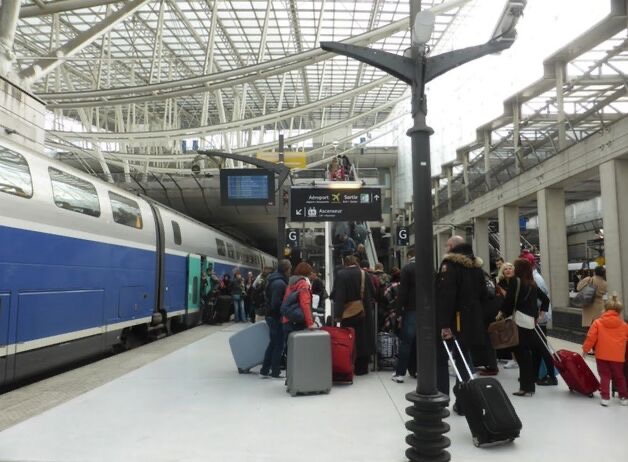


Charles de Gaulle Airport (CDG) is 30 km northeast of Paris.
RER B Train (Best Balance of Speed & Price)
- 25–35 minutes
- Runs every 10–15 mins
- Stops at Gare du Nord, Châtelet–Les Halles, Saint-Michel–Notre-Dame
- ~€11–12 (Zones 1–5)
- Navigo (Zones 1–5) accepted
If arriving at Terminal 1, take CDGVAL shuttle to the train station.
Roissybus (Direct to Opéra)
- 60–75 minutes
- Every 15–20 mins
- ~€16 (updated fare range)
- Great if staying in 9th arrondissement
Taxi (Flat Fare System)
- Right Bank: ~€53
- Left Bank: ~€58
No surcharges, luggage included.
Uber / G7 Taxi
Both work well. Free WiFi at CDG.
How to Get Around Paris
Paris public transport includes:
- Métro (16 lines)
- RER (suburban trains)
- Bus
- Tram
- Regional trains (TER / Transilien)
Inside Paris – Métro

- Runs ~6:00am–12:45am (1:45am Fri–Sat)
- Very frequent (every 2–4 minutes peak)
- Contactless payment now accepted at many gates (2024–2026 rollout)
- Single ticket ~€2.15 (price updated)
Pickpocket warning: crowded lines like Line 1 and Line 4 require extra attention.
Personally:
- First trip → 100% Metro
- Second trip → more buses (Google Maps makes it easy and I love seeing the city above ground)
Outside Paris – RER
You’ll use RER for:
- Palace of Versailles
- Disneyland Paris
RER requires validating on exit too.
Travel Passes & Tickets (Updated 2026)
Navigo Easy (Best for Tourists)
Rechargeable, €2 card fee.
Load:
- Single tickets
- 10-ticket carnet (cheaper)
- Roissybus / Orlybus
Much more practical than paper tickets.
Note: For RER outside Paris (Versailles, Disney), you still need specific RER tickets.
Navigo Découverte (Weekly Pass)
Best if:
- Staying Monday–Sunday
- Moving a lot
- Including airport + Versailles
Requires photo + name. Card cost ~€5.
Valid Monday–Sunday only (important!).
Paris Visite Pass
Unlimited transport for 1, 2, 3 or 5 days.
Convenient but often expensive unless you travel extensively daily including airport zones.
Cultural & Practical Tips
- Always say Bonjour when entering shops or restaurants.
- Say Au revoir when leaving.
- Public toilets are limited — use facilities when available.
- Know your hotel’s exact address.
- Watch your belongings in crowded transport.
- Don’t expect small talk in queues — Parisians are polite but formal.
Final Thoughts
Paris can feel overwhelming — but once you understand the spiral of arrondissements and master the transport system, it becomes beautifully manageable.
Over the years, I’ve stayed in luxury hotels by the Eiffel Tower, boutique properties in Saint-Germain, and even quiet local Airbnbs. Each trip felt different — but equally magical.
Paris rewards those who slow down.
Walk. Take the bus instead of the metro once in a while. Sit in a café longer than necessary. Jog along the Seine in the morning. And remember — logistics may get you around the city, but it’s the small moments that make you fall in love with it.
Enjoy Paris 🤍


One Comment